
Planning your journey
TRANSPORT
Transport in the Netherlands, a survey
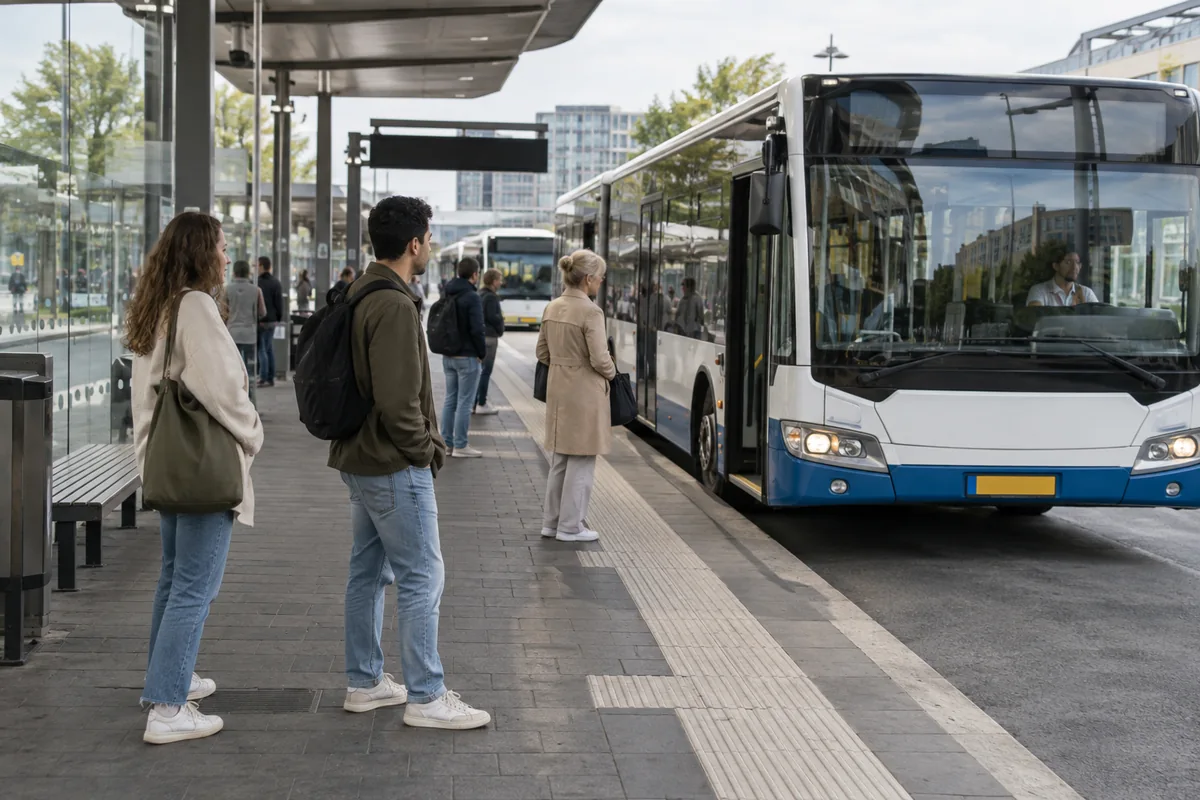
Ways to travel
Trains connect towns and cities; buses serve local and regional routes. Trams run in several cities and metros operate in Amsterdam and Rotterdam and the surrounding network. Bicycles are useful for many short journeys. Cars, taxis, ferries and international flights serve other needs.
NS and regional companies operate passenger trains; ProRail manages much of the railway infrastructure. Schiphol is near Amsterdam. Check your route and connections instead of assuming every place has frequent public transport.

Planning a train journey
Use the carrier’s travel planner or a public-transport planner. Enter your start, destination, date and time. Check the departure station, platform, transfers, arrival time and disruptions again before travelling.
Intercity trains generally stop at major stations; Sprinters and regional stopping trains call at more stops. Check first or second class and accessibility. Facilities differ by train. Ask the operator about travel assistance in advance when needed.
Taking a bicycle may require a special ticket and is subject to time and capacity rules. International trains can require reservations and separate tickets. Check current conditions and travel documents with the operator.
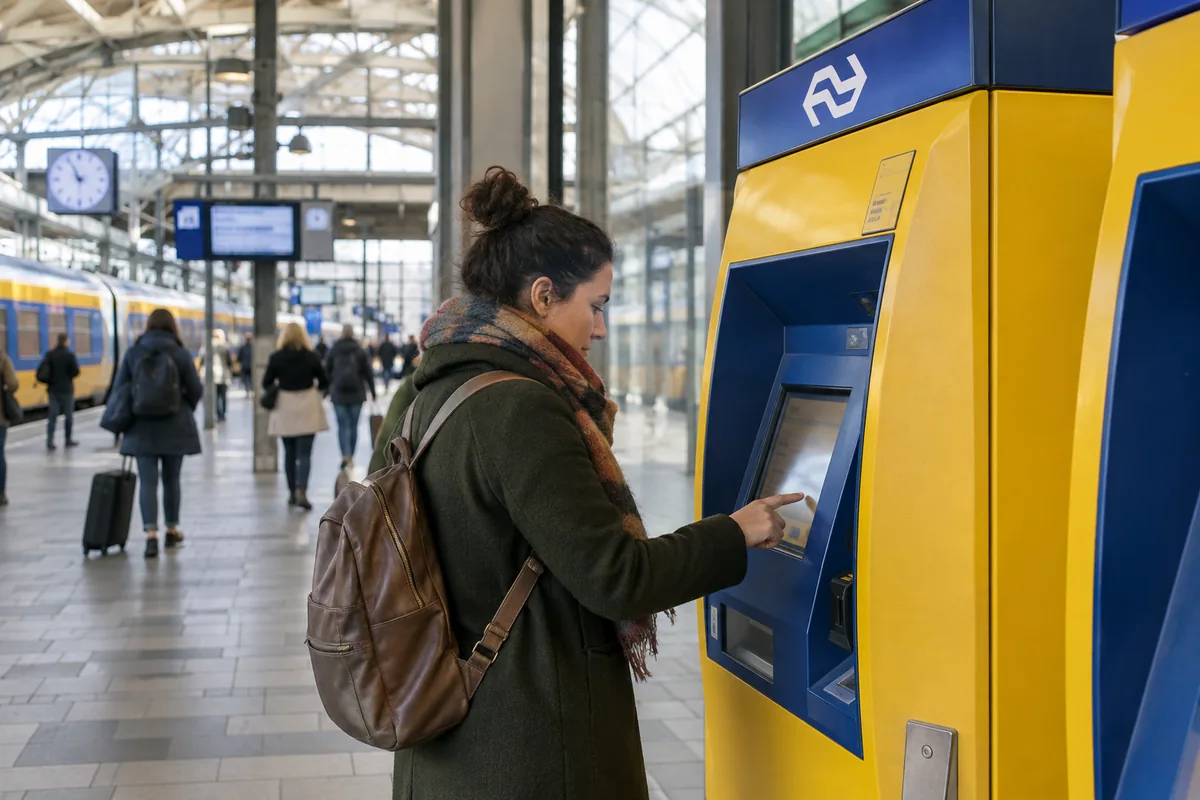
Tickets, checking in and checking out
Choose a ticket or payment method accepted on your journey. This may be an e-ticket, a transport card or OVpay with an eligible contactless bank card, credit card or mobile device. Check OVpay and your carrier for current options during the change from OV-chipkaart to newer methods.
With a check-in method, check in before travelling and check out at the end using exactly the same card or device. A phone and the plastic bank card linked to it are not interchangeable for this purpose. When changing operators or vehicles, follow their transfer instructions.
An e-ticket has its own instructions; do not also check in with a bank card and accidentally pay twice. Keep your valid ticket available for inspection. If you miss a check-out, use the provider’s correction procedure. Check fares, discounts and validity before buying.
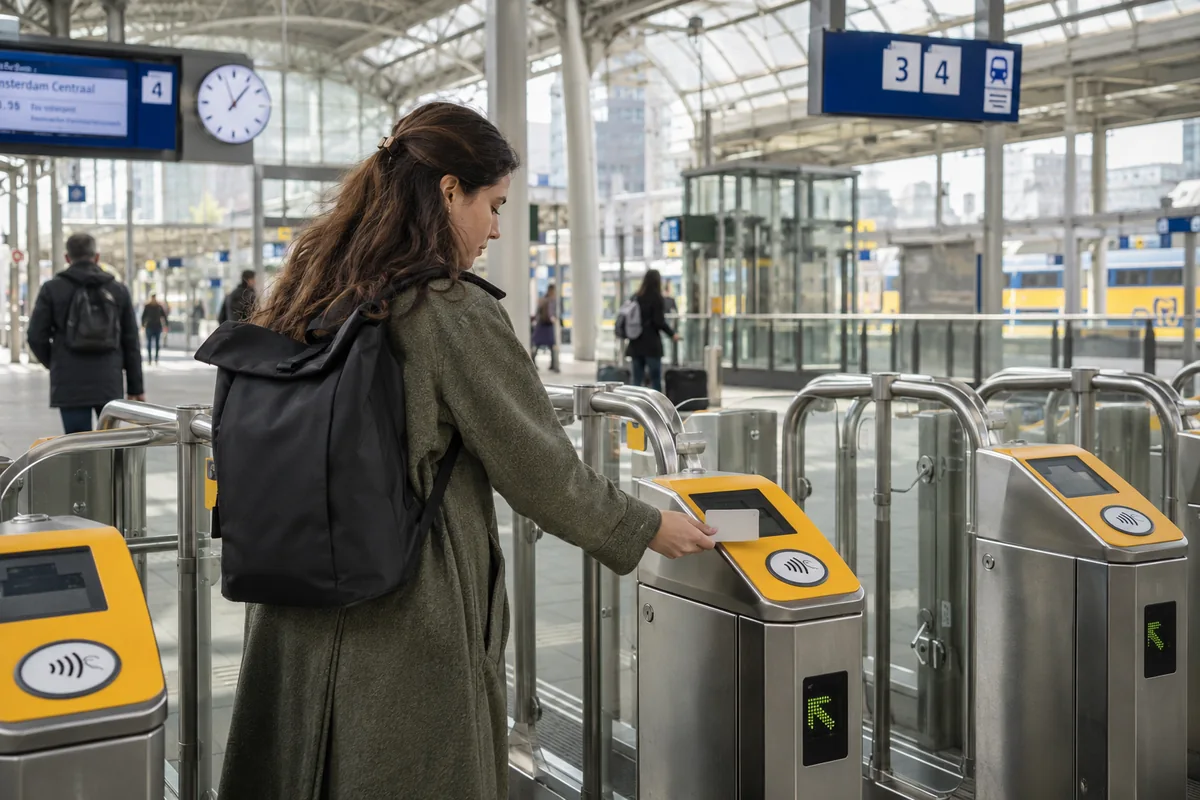
This traveller is checking in with a contactless bank card. When using this payment method, check in and out with the same card or device. Check the operator’s instructions before travelling.
Subscriptions and travel cards
Subscriptions may offer a discount or unlimited travel for a particular operator, route or period. Compare them with how often you travel. A subscription does not automatically cover every mode of transport.
The older term OV-jaarkaart appears in the vocabulary lesson. It is not a current promise of one universal annual ticket. Check the operator’s current products, payment conditions and how a subscription is linked to a card.
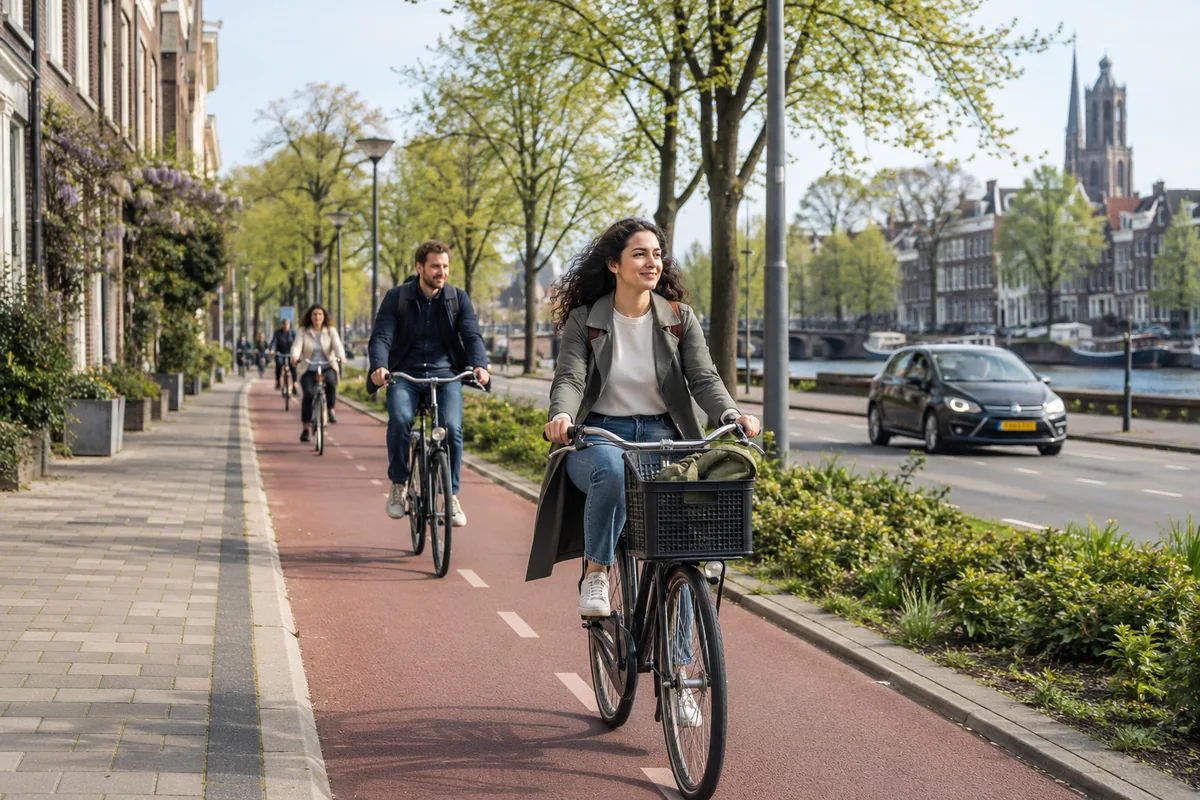
Bus, tram, taxi and bicycle
Check the bus or tram route and direction, and request your stop in time. For taxis, check the fare or price agreement before the journey and use a legitimate operator.
Cycle on the appropriate side and use cycle paths where required. Follow traffic lights and priority signs; give way when required. Use working lights in the dark or poor visibility. Do not hold a phone while cycling. Additional rules apply to mopeds and speed pedelecs.
A car driver needs a valid licence for the vehicle. Foreign licences have specific validity or exchange rules: check RDW. Wear seat belts, follow speed limits and do not drive while impaired. Vehicle insurance, tax and inspection requirements may apply.

Travelling to work
Ask your employer about travel reimbursement, a public-transport subscription or a bicycle arrangement. Entitlement depends on your contract, cao or employer’s policy; it is not automatically the same for everyone. Compare time, cost and reliable arrival when planning your commute.
Words and expressions
Learn words and expressions
Met de trein
- een kaartje
- van Amsterdam naar Rotterdam
- een OV-jaarkaart
- een kaartje kopen bij de automaat
- een kaartje kopen op internet
- eerste klas, tweede klas
- de conducteur
1. a ticket
2. from Amsterdam to Rotterdam
3. a “public transport annual card” (name of card)
4. buy a ticket at the machine
5. buy a ticket on the internet
6. first class, second class
7. the conductor
Met de bus
- de bus
- de bushalte
- de chauffeur
- ik moet naar Amsterdam
- is dit de goede bus?
- waar moet ik uitstappen?
- hoe laat komt de bus?
1. the bus
2. the bus stop
3. the driver
4. I have to go to Amsterdam
5. is this the right bus?
6. where should I get off?
7. what time does the bus come?
An older travel term
The original recording includes OV-jaarkaart. Learn to recognise the word, but use the current ticket and subscription information in the previous lesson when planning a journey.
Practice test
Sources and current information
Updated October 2026. Check current conditions with the relevant organisation.
You have reached the end of this chapter. Next: Living together.
Choose another category