
Your GP and medicines
HEALTHCARE

At a hospital

Your first contact
For most health problems, contact your GP (huisarts). Register with a practice near your home before you become ill. The GP treats many problems and can refer you to a specialist when needed. In an emergency, different rules apply: see the urgent-care lesson.
The practice assistant asks about your symptoms to assess how quickly you need help. Explain what is wrong and how long it has lasted. Ask for a longer appointment if you have several problems or need help with language.
Take your identification, insurance details and a list of medicines. Ask questions if you do not understand. A doctor does not always prescribe medicine: advice, rest or further assessment may be more useful.

Your first appointment
The Dutch word for GP is huisarts. Tell the practice that you are a new patient. Share relevant medical information, allergies and medicines.
Finding a GP
Ask nearby practices whether they accept new patients. Your health insurer can help you find care if you cannot register. Listen to een huisarts zoeken below.

Registering with a practice
A practice may be full or outside your area. Ask another nearby practice or your insurer for help. Once registered, save the practice telephone number and its instructions for urgent care outside opening hours.

Making an appointment
Call the practice or use its appointment system. The assistant may ask questions and arrange an appointment, telephone advice or another appropriate response. Cancel as early as possible if you cannot attend; ask about the practice’s cancellation rules. Een afspraak maken means making an appointment.
Medicines
The Dutch word for medicines is medicijnen. Follow the instructions and ask the pharmacist if you are unsure how to use them.

The pharmacy
A prescription is a recept. It is often sent electronically to the pharmacy (apotheek). Tell the pharmacist about other medicines and allergies. Some products can be bought without a prescription, but they can still have risks. Do not share prescribed medicines.
Ask about costs and reimbursement. Some medicines count towards the deductible or have an additional contribution. Do not stop or change prescribed treatment without discussing it with a healthcare professional.
Insurance and healthy living

Hospital
How care is organised
Your GP provides primary care. A specialist usually works in a hospital and normally requires a referral for insured specialist care. Emergency care is an exception. Your insurer can explain contracted providers and waiting-list assistance. Zorg means care.
Basic health insurance
People who live or work in the Netherlands usually need Dutch basic health insurance (basisverzekering). Special arrangements apply to some groups, such as people receiving care through asylum or temporary-protection schemes. Check which rules apply to you.
Adults pay a premium. Insurers offer different policies and provider arrangements. People on lower incomes may qualify for healthcare benefit (zorgtoeslag); it is not automatic. Enrol children too: under 18 they pay no basic-insurance premium and have no deductible.
The deductible (eigen risico) is an amount adults pay themselves for certain covered care. A GP consultation is excluded, but tests, medicines or hospital care ordered by the GP may count. A personal contribution (eigen bijdrage) is different and may also apply. Check your policy rather than assuming every bill is covered.

Hospital care
Take identification and insurance details to a hospital appointment. Ask what will happen, how to prepare and when results will arrive. Check coverage with your insurer, especially for planned care and providers without a contract. Healthcare is funded through premiums, contributions and public funds.

Looking after your health
Eat a varied diet, move regularly and allow time for sleep and relaxation. Ask your GP for help with smoking, alcohol, drugs or other habits that affect your health. Preventive checks and screening can help detect problems; read invitations and ask questions before deciding.
Discuss sexual health and contraception with your GP or a sexual-health service. The contraceptive pill does not protect against sexually transmitted infections. Condoms reduce the risk of these infections. Both partners share responsibility for consent and protection.
Mental health
Stress, anxiety, grief and low mood are also reasons to contact your GP. The GP or practice mental-health worker can offer help and arrange further care when needed. You do not have to manage these problems alone.
Choosing a policy and handling bills
You can normally change health insurer once a year, following the cancellation and registration deadlines. Compare the premium, contracted providers and reimbursements. Additional insurance is optional. The basic package includes GP care, district nursing and qualifying mental-health, maternity and older-person care; conditions apply. Children’s physiotherapy is covered under specific rules.
If you receive a bill, follow your insurer’s claim procedure and keep the invoice. Many claims, appointments and applications are handled online. DigiD is used to log in to many healthcare and government services. Never share your password or approval codes. Ask your insurer, municipality, support worker or a library digital-help desk if you need help.
Ask your insurer about paying the deductible in instalments if paying it at once is difficult.
Words for the doctor
Learn basic words
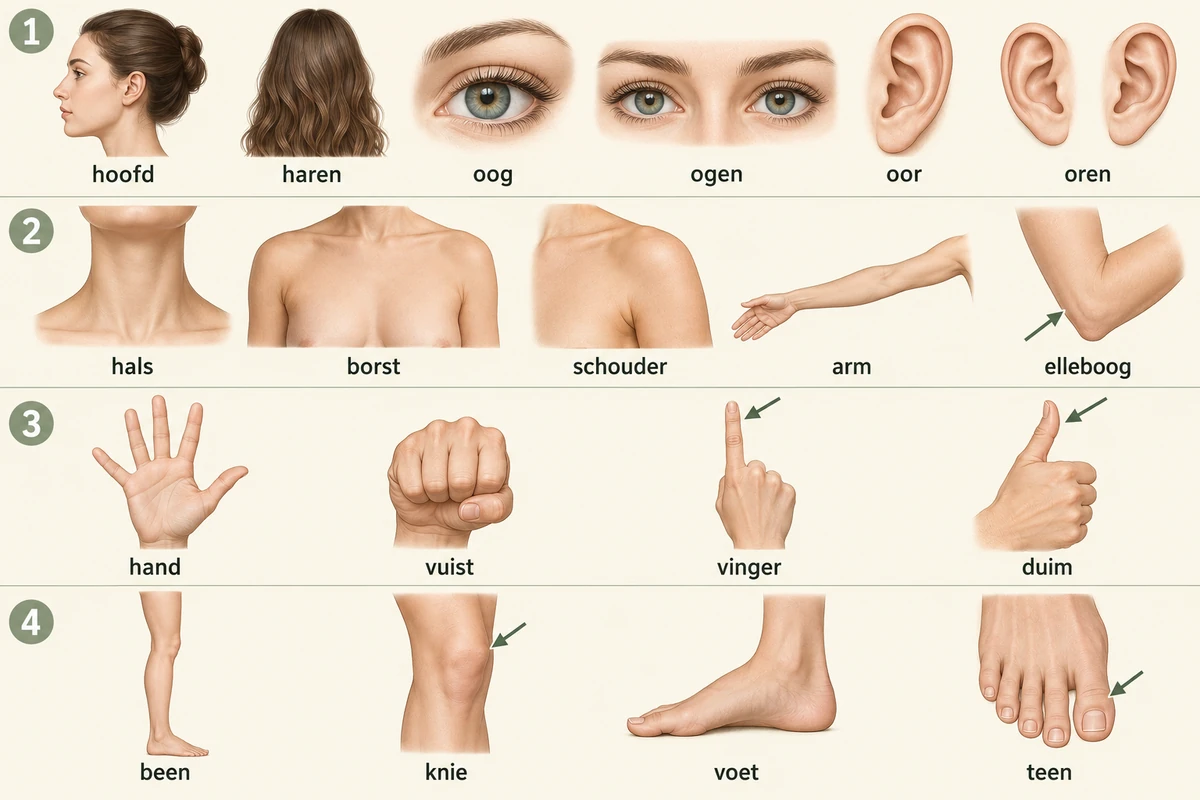
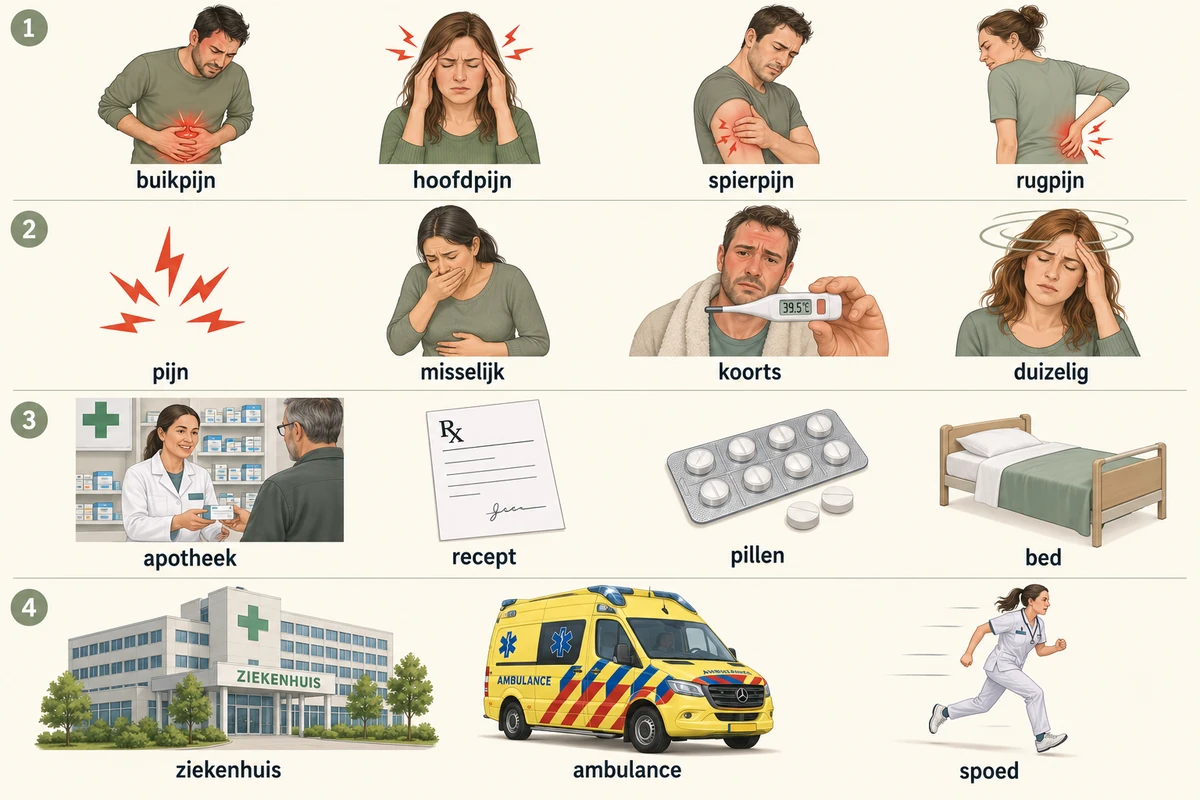
Hulp vragen
- waar is een dokter?
- waar is het ziekenhuis?
- waar is de apotheek?
- hallo dokter ik ben ziek
At the doctor
Bij de dokter · 1
- dokter
- ik ben ziek
- ik heb koorts
- ik voel me niet goed
- ik heb pijn
- hier doet het pijn
- ik ben misselijk
- ik ben moe
Doctor's reply
Bij de dokter · 2
- gaat u zitten
- gaat u hier maar liggen
- ik ga u onderzoeken
- wat zijn de klachten?
- hoe lang duren die klachten al?
- heeft u dit eerder gehad?
- u krijgt een recept van mij
- dat moet u bij de apotheek ophalen
Dentist, urgent care and specialists

The dentist
A dentist (tandarts) looks after teeth and gums. Register with a dental practice and arrange check-ups according to the dentist’s advice. Contact the practice if you have toothache or damage to a tooth.

Finding dental care
Ask whether a practice accepts new patients. Check costs before treatment. Most routine dental care for children under 18 is covered by basic insurance; braces are generally not. Routine adult dental care usually requires payment yourself or suitable additional insurance.
Help with arranging care
If you are new to the Netherlands, an insurer or support worker can help you understand how to find a dentist and which scheme covers you. Ask for an estimate for more expensive treatment and check your coverage.

Urgent help: who do you call?
Call 112 for a life-threatening situation or when you suspect one. For urgent medical problems that are not life-threatening, call your GP during opening hours. Outside those hours, call the huisartsen-spoedpost when the problem cannot wait.
Call first: a professional assesses what help is needed and where you should go. Do not use 112 for general healthcare questions.
First aid is not the same as an emergency department
EHBO means first aid. The hospital emergency department is called spoedeisende hulp or SEH. A GP emergency service and a hospital emergency department are different services.

Hospital emergency care
In a life-threatening emergency, call 112. Ambulance professionals or the GP emergency service can arrange hospital care when needed. For an urgent problem without immediate danger, telephone the GP or GP emergency service first instead of going straight to the hospital.
Specialist care
Your GP can refer you to a specialist, such as a cardiologist or dermatologist. Ask why you are referred and how to book. Tell the specialist about your medicines, allergies and other treatment.
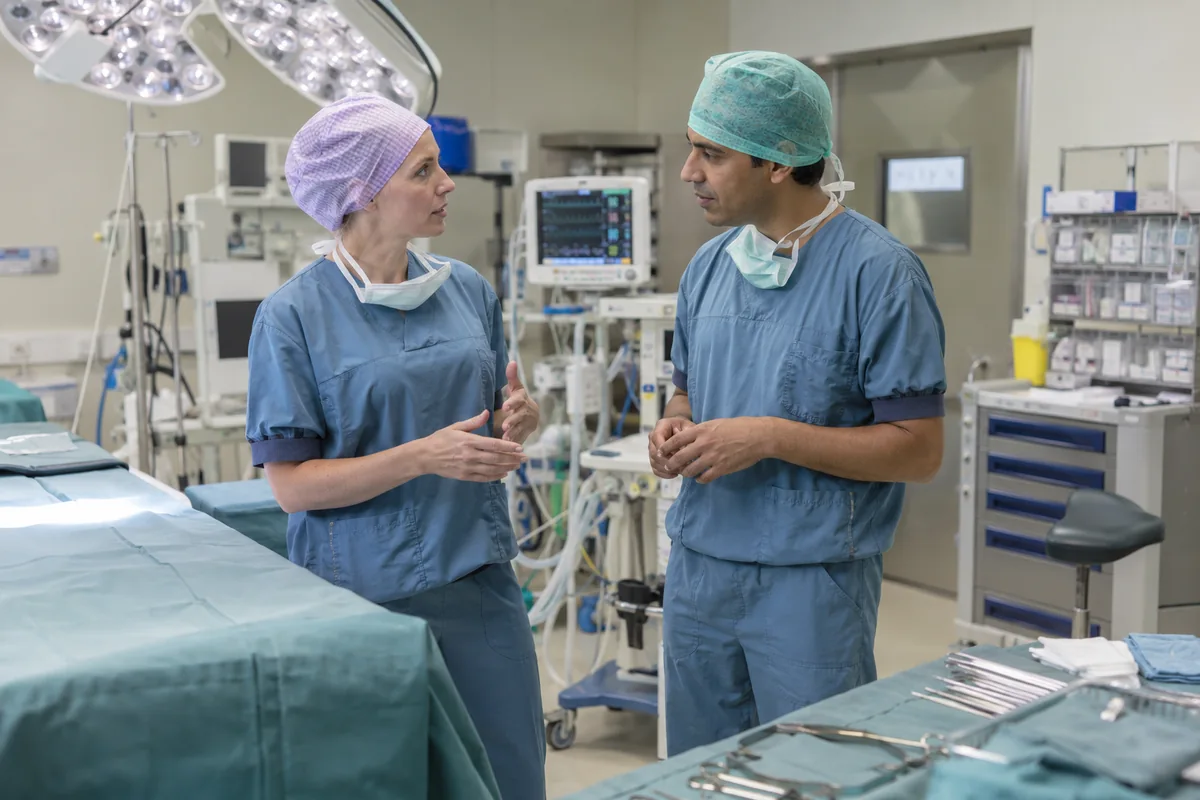
An operation
Before surgery, the care team explains the procedure, risks, alternatives and recovery. Ask questions and discuss your consent. Follow the hospital’s preparation instructions and arrange help at home if needed.
Pregnancy, children and ongoing care
Understanding your care
You have the right to understandable information and to discuss treatment choices. Healthcare professionals normally need your consent for treatment and must handle medical information confidentially. Ask about access to your records or how to make a complaint if needed.
If language is a problem, tell the practice before the appointment. Ask how a professional interpreter can be arranged and whether there are costs. Do not assume an interpreter is always free.
You have the right to use an interpreter so you can understand your care. Discuss arrangements beforehand. Conversations with the GP and practice nurse are covered by professional confidentiality. Ask for an explanation of what information may be shared and when your consent is needed.

Pregnancy and maternity care
When you are pregnant, contact a midwife (verloskundige). You can usually contact a midwifery practice directly. The midwife follows the pregnancy and arranges specialist care when necessary. Discuss medicines, symptoms, screening choices and preparation for birth.
Arrange maternity care (kraamzorg) in time. This is support for parent and baby around and after the birth; it is not ordinary childcare. Coverage and personal contributions depend on the type of care and circumstances. Ask your insurer.
Where to give birth
Discuss home, birth-centre or hospital birth with the midwife. Your wishes and medical situation determine which options are appropriate. Sometimes hospital care is necessary. Immigration status does not determine where you must give birth.
Your child’s health
The consultatiebureau and youth healthcare follow young children’s growth and development. You can ask about feeding, sleeping, parenting and health. Later, youth healthcare also supports school-age children.
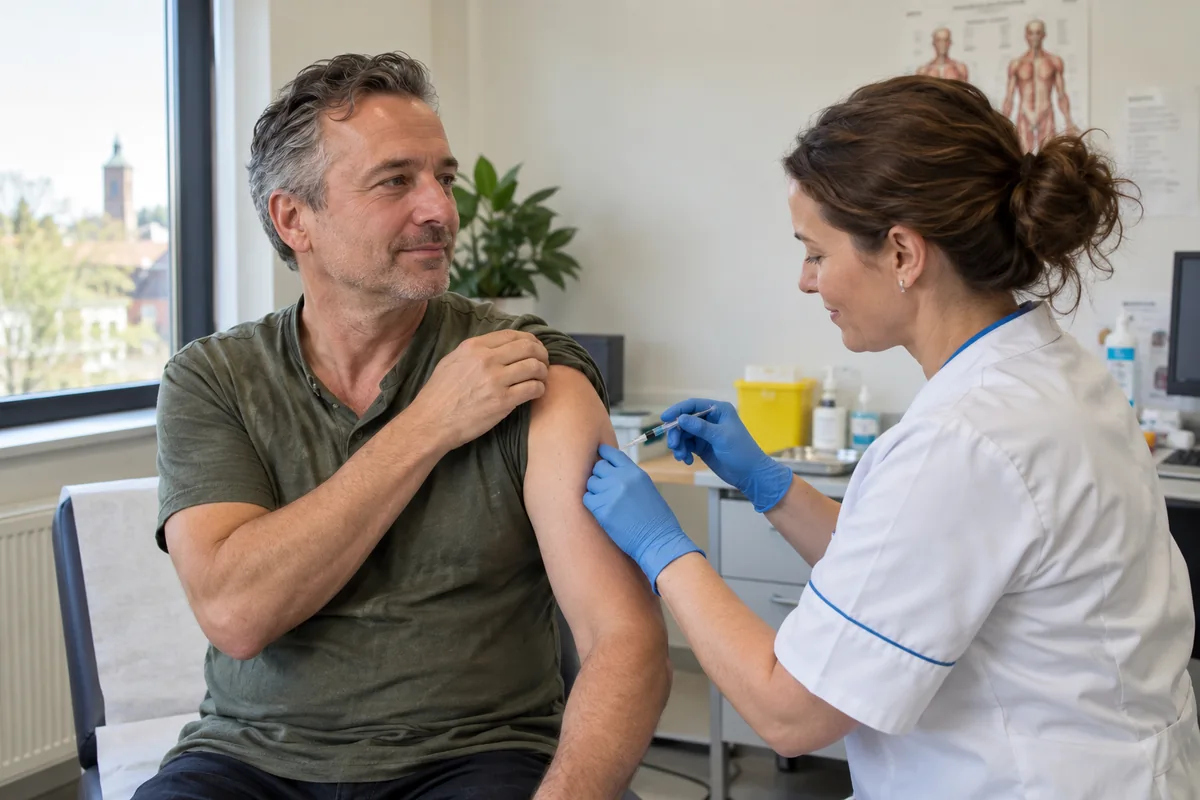
Children are offered vaccinations through the national vaccination programme. Participation is voluntary; ask about benefits, possible side effects and the schedule. If your child is ill, contact the GP rather than waiting for a routine child-health appointment.

Practical help for new parents
Tell your care provider if you need language support. Ask a support worker for help making appointments, enrolling your baby with an insurer and finding local services. Keep appointment letters and vaccination information.
 CIZ
Long-term care and support
People who permanently need intensive care may qualify for the Wet langdurige zorg (Wlz). The CIZ assesses eligibility, including the need for permanent supervision or care nearby around the clock. Eligibility is assessed individually.
Other help may come through the municipality under the Wmo, or through health insurance, for example district nursing. Ask your GP, municipality or insurer where to start. Families caring for a child with intensive care needs can ask the SVB about possible additional child benefit and its conditions.

Physiotherapy
A physiotherapist (fysiotherapeut) helps with movement and physical functioning. Ask the practice whether you can book directly or need a referral for your situation or reimbursement.
Paying for physiotherapy
Basic insurance covers physiotherapy only in certain circumstances. Coverage differs for adults and children and by condition. Additional insurance may cover more. Check your policy and ask about costs before starting treatment.
Support in your neighbourhood
The municipality or neighbourhood team can explain support with debt, poverty, loneliness, participation and help at home for older people, people with disabilities and people with long-term illness. Ask the municipal service desk which services are available and how to apply.
More words and expressions
Learn words and expressions
Bij de tandarts
- tandarts
- een afspraak maken
- ik heb kiespijn
- deze tand
- deze kies
- er is een stuk afgebroken
- ik moet een kies trekken
1. dentist
2. make an appointment
3. I have a toothache
4. this tooth
5. this molar
6. a piece has broken off
7. I have to pull a tooth
Words and Sentences
Zwangerschap en geboorte
- ik ben zwanger
- zorg tijdens de zwangerschap
- geboorte
- hulp tijdens de geboorte
- de bevalling
- het was een zware bevalling
- consultatiebureau
- controle
1. I am pregnant
2. care during pregnancy
3. birth
4. assistance during birth
5. childbirth
6. it was a difficult birth
7. child health clinic (growth, development and preventive care)
8. check (see if everything is ok)
Practice test
You have reached the end of this chapter. Next: Public services.
Choose another category