
Working in the Netherlands
WORK
Working in the Netherlands

Working in the Netherlands
This chapter covers finding work, contracts, pay, safety and support. Work in NL offers information about working and living here. UWV handles employee-insurance benefits and employment support; its services are not only for Dutch passport holders. Your municipality may also help. RefugeeHelp provides information for refugees.
Check whether you are allowed to work under your residence conditions. If you follow an integration route, ask about the Module Arbeidsmarkt en Participatie (MAP) or other preparation for work. The written lessons give updated information alongside the original introductory video.
Your situation and support
Introducing working in the Netherlands requires a clear explanation of the different groups that enter the labour market. This diversity in the job-seeking population brings both opportunities and challenges. Here is a brief introduction describing the situation of the most important groups.

EU, EEA and Swiss workers
Citizens of EU/EEA countries and Switzerland generally do not need a Dutch work permit. Rules still apply to residence, registration and employment. Workers have rights concerning pay, working time, safety and equal treatment.
A Work in NL information point can explain practical matters in several languages. Do not assume that being new to the country gives you fewer employment rights.
Working together: every worker has rights to fair pay, equal treatment and a safe workplace.

Language and your rights
Dutch language and communication skills can improve your opportunities; some jobs require them. Ask an employer, training provider or municipality about language courses. Check your contract, pay and working conditions even if you do not yet read Dutch well.
Get advice from a union, Work in NL information point or legal adviser if you suspect underpayment or exploitation. Keep copies of your contract, payslips and hours worked.
Asking for advice: get help understanding your contract, pay and working conditions.

Building of UWV organisation
People who lose their job
Contact UWV promptly if you lose employee work and may qualify for unemployment benefit. Support and eligibility depend on work history and other conditions, not simply on having a Dutch passport. Ask about retraining or help finding work.

Town hall = “gemeentehuis”
Asylum permit holders looking for work
Asylum permit holders may work under the conditions on their residence document. Language, recognition of qualifications and a local network can help in finding suitable work. The municipality can explain support, education and integration arrangements.
An asylum seeker awaiting a decision is in a different position: check current work-permission rules rather than assuming the same rules apply.

Differences and similarities
Which organisation should you contact?
UWV handles benefits such as WW and WIA under their conditions. The municipality handles social assistance (bijstand) and related support. A permit or nationality does not automatically entitle someone to a benefit.
If you have no relevant employment history and cannot support yourself, contact the municipality promptly. If you have worked and become unemployed or unable to work, contact UWV about the applicable procedure. Ask either organisation how study or work affects support.

Your own situation
Permission to work can depend on nationality and the type of residence permit. A sponsoring employer may help with paperwork, but you should still understand your rights. Check official IND and UWV information for your route.
Finding a job

Different kinds of work
An werkgever is an employer; an werknemer is an employee. A permanent contract has no fixed end date; a temporary contract normally does. Agency work and on-call work have their own conditions and can sometimes lead to more secure work.
Part-time means fewer hours than the usual full-time week. Working hours may be regular or involve shifts, evenings or weekends. Volunteering is usually unpaid, though an expense allowance may be possible under conditions. Report volunteering when your benefit rules require it.
Self-employed people work for their own business. Undeclared work can break tax and benefit rules and leave you without proper protection. Pension age depends on your birth date and scheme; check the SVB rather than relying on one age for everyone.

Finding suitable work
Think about your skills, qualifications, language, interests and available hours. Look for vacancies online, through your network, employers and employment agencies. Jobs exist in care, technology, construction, hospitality, trade, transport, administration, security and agriculture. Some occupations require formal qualifications or registration.
Read the tasks, requirements, hours, location, pay and application deadline. Ask about anything unclear before applying.
Benefits and responsibilities
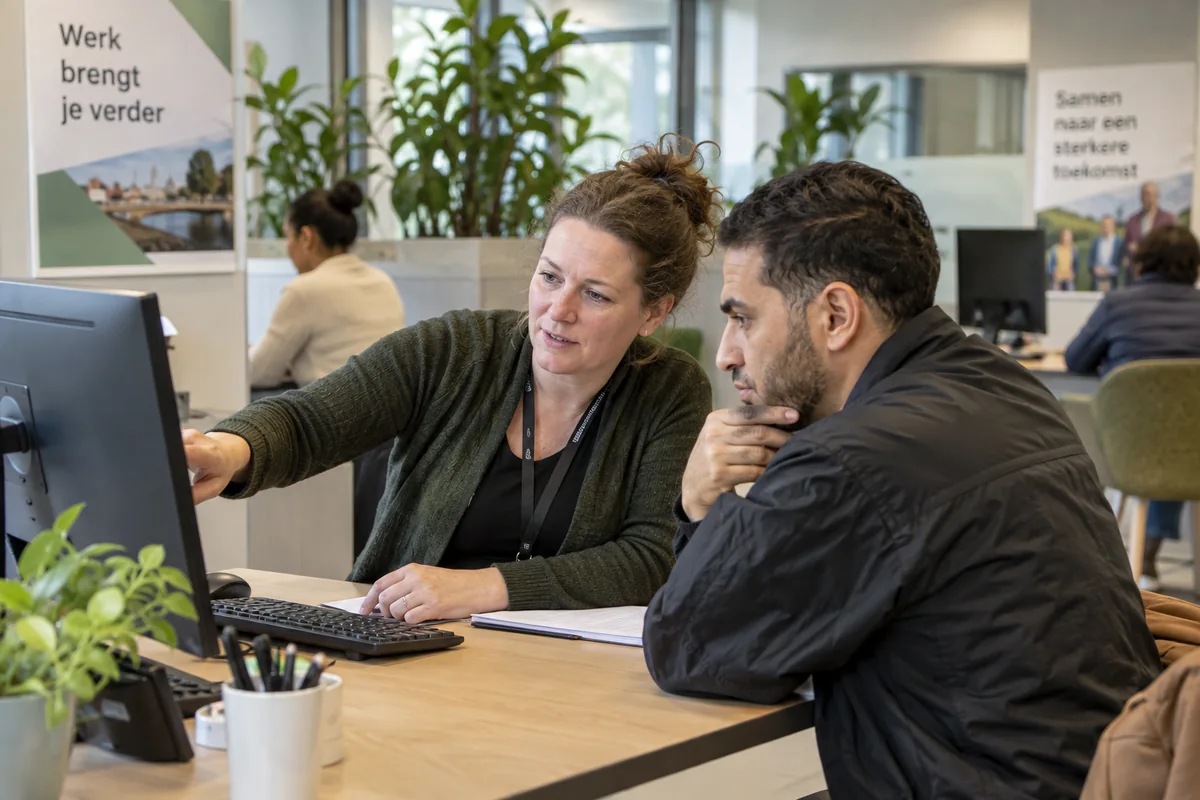
WW is not automatic after six months of work. UWV checks conditions such as insured work history, loss of hours and availability for work. Disability benefits such as WIA also require assessment and conditions; illness does not automatically qualify you. Social assistance is assessed by the municipality, including income, assets and household circumstances.
Benefits come with duties: supply correct information, report changes in work or income promptly and follow applicable job-search and reintegration requirements. In principle, suitable or generally accepted offered work must be accepted under the relevant rules. Ask what applies to you. Starting a business can affect or end benefits: discuss it before registering or starting work.

Employment agency
Employment agencies and applications
You can register with an uitzendbureau to look for agency work. Check who employs and pays you, the contract, hours and any deductions.
A CV describes relevant experience, education and skills. A cover letter or application form explains why you fit the job. Use accurate details; you do not need to include unnecessary sensitive information. Keep a record of your applications.

Job interview
The job interview
Read about the employer, plan your journey and arrive on time. Introduce yourself politely and dress suitably for the workplace. Prepare examples of your skills and questions about tasks, hours, pay and training.
The usual steps are finding a vacancy, researching it, applying, attending an interview, receiving a decision and agreeing employment terms before starting. Do not sign a document you do not understand; ask for time and an explanation.
Contracts and trade unions

Employment contracts and collective agreements
A contract records rights and duties such as hours, pay, start date, duration, leave and notice arrangements. Ask for written terms and keep a copy. A probation period must meet legal conditions; a contract of six months or less cannot have one. Do not assume every new job includes a valid probation period.
A collectieve arbeidsovereenkomst (cao) is negotiated between employers or employer organisations and unions. It can set terms for a sector or employer. You may negotiate individual conditions, within the law and applicable cao. Ask which cao applies.
Check pay against the current minimum wage or applicable cao, holiday entitlement and holiday pay. Follow rules for attendance, recording hours, sickness reporting, safety and leave. Ask for advice before resigning or agreeing to dismissal because this can affect benefits.
Trade unions
A vakbond represents workers’ interests. Examples include FNV, CNV and unions affiliated with VCP. Different unions cover different sectors and professions. Membership and legal-help conditions vary; check before joining.
 FNV
 CNV
 De Unie

Negotiate
What unions do
Unions negotiate collective agreements, advise on rights and campaign for fair pay and safe work. They may provide legal support and training under membership conditions. They are separate from an employer’s works council.
Qualifications and skills

Job interview
Qualifications and experience
Some jobs require a diploma, licence or professional registration. Foreign qualifications can be evaluated through the appropriate recognition service, such as IDW; regulated professions may need a separate recognition procedure. An evaluation does not itself guarantee admission to a profession.
Other jobs do not require a formal diploma but still demand skills, responsibility and safe working. Do not assume they are easy to obtain or that you must always start below your abilities.
Learning throughout your career
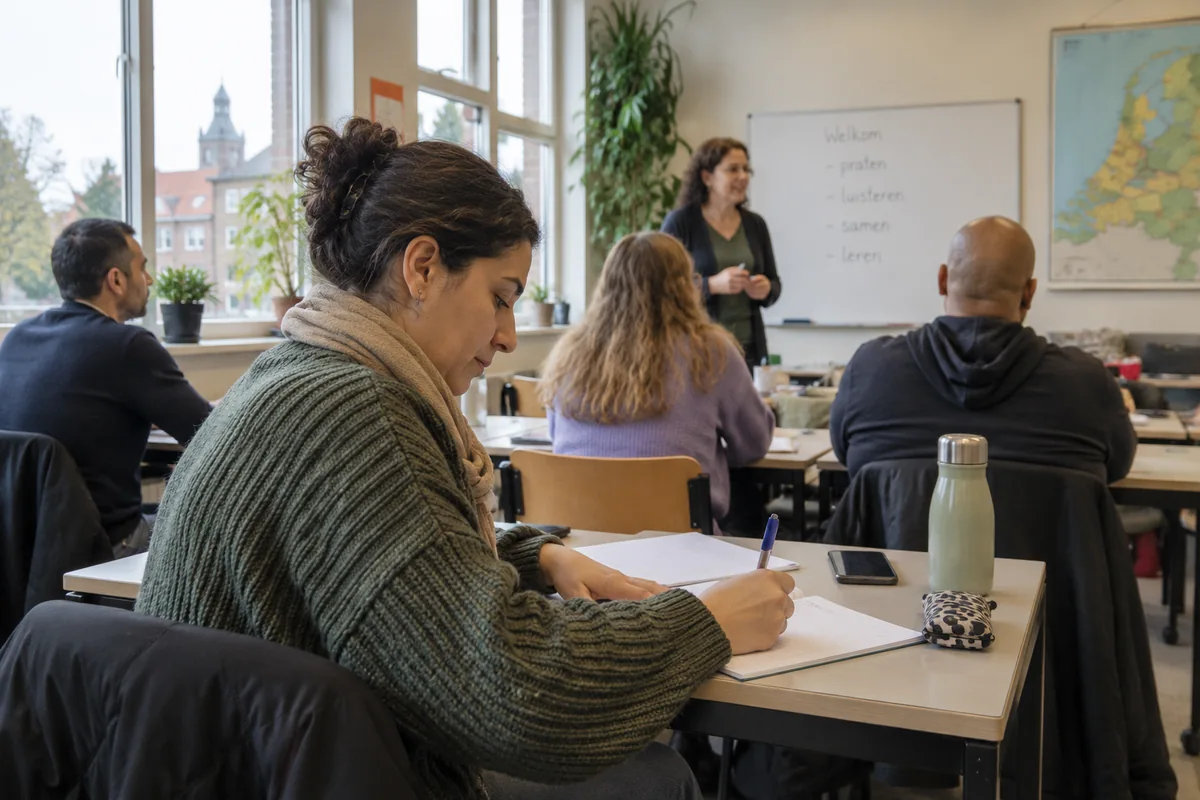
Training, a course, an internship or recognition of prior learning can help show and improve your skills. Discuss suitable options and funding with the employer, municipality, UWV or education provider before enrolling.
Describe your strengths with examples: reliability, practical skills, communication or problem solving. Motivation, availability and language can matter alongside diplomas. Prepare for a performance review by collecting examples and goals.
Participation and safe work

Having a voice at work
An ondernemingsraad (OR) consists of elected employee representatives. An OR is normally required in organisations with at least 50 employees. It has information, consultation and consent rights on specified matters; management is not elected onto it as employee representation.
A school’s medezeggenschapsraad (MR) represents staff and parents, and in secondary education pupils too. It is not simply a public-sector OR with the same 50-person threshold. Staff associations organise social activities; they have a different role from an OR or union.

Healthy and safe work
Arbo refers to working conditions. Employers must provide safe conditions, instructions and necessary protection. Employees must follow safety instructions, use protective equipment and report hazards or accidents. Do not operate equipment you have not been trained to use.
Follow the employer’s sickness-reporting procedure. The occupational physician (bedrijfsarts) advises about health and work; medical details are confidential and are not simply shared with a manager. Ask for help with unsafe work, harassment or excessive workload. Arboportaal and the Netherlands Labour Authority provide information.
Pay, business and colleagues

Payslips and taxes
A payslip (loonstrook) shows gross pay, deductions and net pay. Net pay is the amount remaining after deductions. A jaaropgave summarises annual pay and tax information; keep it for at least five years.
An employer handles payroll deductions and contributions under the applicable rules. Tax funds public services. If you must file an income-tax return, follow the deadline in the tax authority’s notice; 1 March is not a universal filing deadline. A return can lead to a refund or an extra payment.
For example, gross pay of 1,600 euros and net pay of 1,200 euros would mean 400 euros in deductions. This is only an arithmetic example, not a current wage or tax calculation.

Starting a business
Starting a business requires planning: customers, prices, costs, tax, records, permits and insurance. Register with the Chamber of Commerce (KVK) when you meet the business-registration conditions. Its website also provides information in English. Some regulated activities require specific qualifications; this is not true for every trade.
A lender may ask for a business plan. Borrowing and hard work do not guarantee profit. Arrange protection for risks such as illness and consider pension provision. You do not automatically receive employee benefits or paid holidays.
If you receive a benefit, consult UWV or the municipality before starting or registering. Starting work for yourself can change or end entitlement; special arrangements may apply. Report your activities and income as required.

Working with colleagues
Follow workplace agreements, communicate about tasks and record hours when required. Ask for help, give respectful feedback and prepare for performance discussions. Social activities can help you get to know colleagues, but people may have different preferences.
Discrimination by employers or colleagues is prohibited. You do not have to dismiss harassment as a joke. Keep a record and seek help from a confidential adviser, union, manager or an antidiscrimination service. Threats, violence or other crimes can be reported to the police.
Words about work
Learn words about work
Werk en inkomen
- een tijdelijke baan
- een volledige baan
- zwartwerker
- werknemer
- werkgever
- eigen bedrijf
- ik heb een eigen bedrijf
1. a temporary job
2. a full job
3. somebody who works secretly without paying taxes
4. employee
5. employer
6. own company
7. I have an own company
Werk zoeken
- ik zoek werk
- in de bouw · op een boerderij
- in een hotel · in een restaurant
- in een magazijn · in een fabriek
- in een winkel
- alles is goed
- ik werk graag
1. I am looking for a job
2. at a construction company on a farm
3. in a hotel in a restaurant
4. in a warehouse in a factory
5. in a shop
6. everything is good
7. I like to work
Practice test
Sources and current information
Updated October 2026. Check current conditions with the relevant organisation.
You have reached the end of this chapter. Next: Transport and travel.
Choose another category